What is a Robotic Vacuum Cleaner?
A robotic vacuum cleaner (often called a “robovac”) is one of those gadgets that quietly went from “cool but clumsy” to genuinely useful in everyday life. What started as a novelty is now a smart home essential for many households.
The Evolution of the Robovac
| Era | Milestone | Key Features |
|---|---|---|
| 1996 | The Prototype | Electrolux introduced the Trilobite. It used ultrasound for navigation but struggled with corners and efficiency. |
| 2002 | The Breakthrough | iRobot launched the Roomba, making robovacs mainstream with simple “random bounce” cleaning. |
| 2010s | The Smart Era | Adoption of LiDAR and vSLAM mapping. Vacuums began intelligently mapping homes instead of wandering randomly. |
| 2020s | The Hands-Free Era | Features like auto-empty docks, AI obstacle detection, and app-controlled cleaning routines became standard. |
How They Work Today
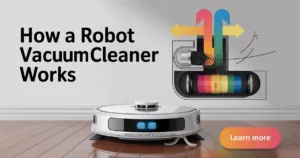
Modern robotic vacuums are essentially compact, mobile computers that combine smart navigation with mechanical cleaning:
- Navigation: Premium models use LiDAR to scan rooms and build precise digital maps. This allows them to clean in neat, systematic lines rather than leaving spots.
- Sensors: Built-in cliff sensors prevent falls from stairs, while wall and obstacle sensors help them clean edges and avoid collisions.
- Cleaning System: A side brush pulls debris inward, a central roller agitates dirt, and suction lifts it into the dustbin.
- Mopping (Hybrid Models): Many now include a water tank and microfiber pad for light floor mopping alongside vacuuming.
Why They Are So Popular
The real magic is automation and convenience:
- You can schedule cleaning through an app even when you’re not home
- Ideal for pet owners, as they manage daily hair and dust buildup
- They keep floors consistently clean without daily effort
- Perfect for maintaining cleanliness between deep cleans
That said, they’re not a complete replacement for traditional vacuuming especially for thick carpets or tight corners. Think of them as your daily cleaning assistant rather than a full substitute.