A robot vacuum cleaner uses advanced navigation systems, powerful suction, and intelligent sensors to automate floor cleaning. Unlike upright vacuums, it moves on its own, saving you time and energy.
It cleans hardwood floors, tiles, and carpets efficiently by adjusting its suction power and movement pattern. An advanced robot vacuum can clean your home well. It uses better obstacle detection and mapping. This means it needs little supervision during daily cleaning.
How It Works
1. Sensors and Obstacle Detection
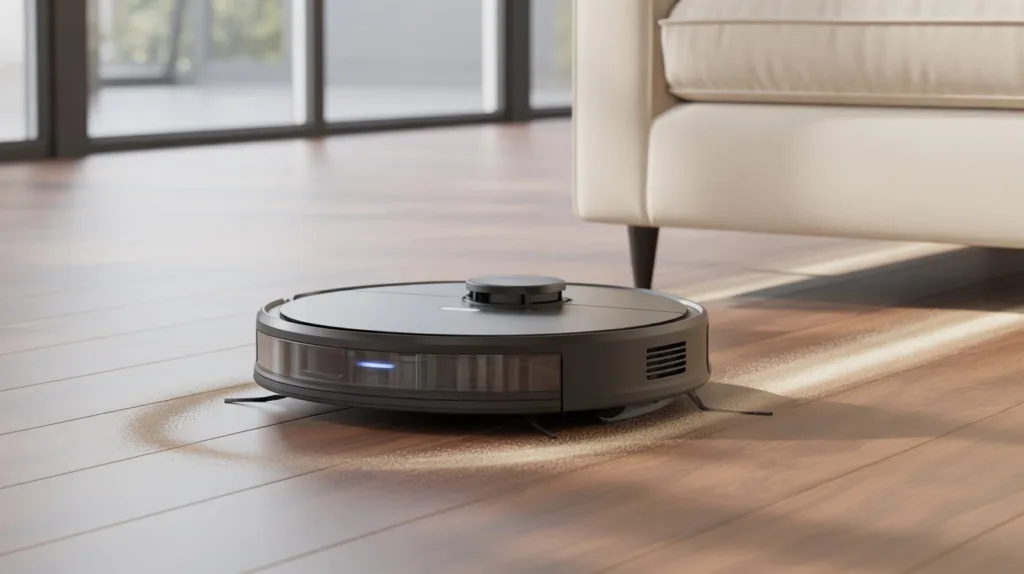
A robot vacuum cleaner relies on sensors that detect walls, furniture, and stairs to plan its route safely. These sensors allow it to detect and avoid obstacles like cords or rugs.
Infrared and ultrasonic sensors help it move easily around your home. Cliff sensors stop it from falling off edges. This smart obstacle detection ensures efficient cleaning without collisions or missed spots.
2. Navigation Systems and Mapping
Modern robot vacuums use lasers or cameras to map your rooms. They plan the best cleaning path. Once the vacuum works through a specific area, it remembers that layout to improve future cleaning sessions.
You can usually control these maps with a mobile app. You can set no-go zones or choose areas for cleaning. This smart mapping system reduces cleaning time and ensures complete coverage.
3. Suction Power and Brushes
The core of a robot vacuum cleaner’s performance lies in its suction power and brush design. Side brushes sweep debris into the path of the main roller brush, which lifts fine dust, crumbs, and hair into the dustbin.
The vacuum changes its suction power based on the type of floor. It uses stronger suction for carpets and lighter power for hardwood floors. This ensures efficient cleaning and battery optimization during each session.
4. Cleaning Modes and Floor Adaptability
A robot vacuum cleaner offers multiple cleaning modes to suit your needs. You can choose automatic cleaning for full coverage, spot mode for a specific area, or edge mode for corners and walls.
Some advanced robot vacuum models also have mopping functions. This makes them great for cleaning different types of floors. These adaptable features allow consistent results across hardwood floors, tiles, and carpets.
5. Automatic Charging and Maintenance
When the battery runs low, most robot vacuums automatically return to their charging station without any user input. After recharging, the device resumes cleaning from where it stopped, ensuring uninterrupted performance.
Some models have a self-emptying base. The robot empties its dustbin into a larger container. This reduces how often you need to maintain it. Regular filter cleaning and brush checks keep the vacuum performing at its best.
6. Smart Home Integration
An advanced robot vacuum connects easily to your Wi-Fi network for app or voice control. You can start or stop a cleaning session, schedule cleaning times, or monitor progress remotely.
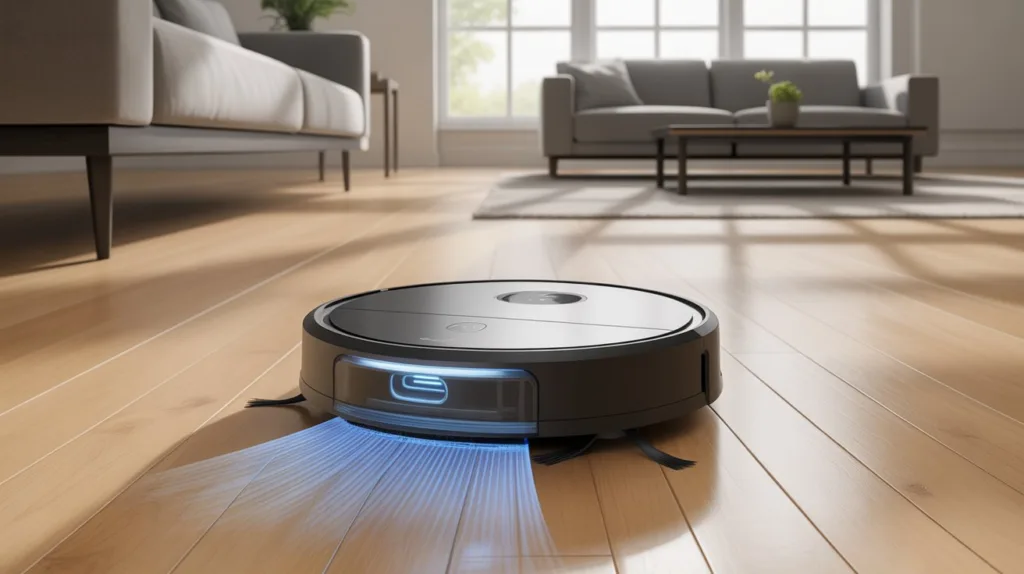
You can use Alexa or Google Assistant for hands-free operation. Real-time tracking shows you which areas you have cleaned. This smart control enhances convenience and ensures the robot vacuum works according to your schedule.
Summary
A robot vacuum cleaner uses navigation systems, sensors that detect obstacles, and powerful suction to deliver efficient cleaning. It moves across multiple flooring types, adjusts its suction power automatically, and returns to its charging station when needed.
With intelligent mapping, scheduling, and smart home connectivity, it reduces cleaning time and effort compared to traditional upright vacuums. A robot vacuum gives you a hands-free way to clean. It works well for spotless hardwood floors or daily cleaning in large rooms.
How does a robot vacuum handle different flooring types?
It automatically adjusts suction power to clean hardwood floors, tiles, and carpets efficiently.
What happens when the battery runs low during cleaning?
It automatically returns to the charging station, recharges, and then resumes cleaning from where it left off.
Can I use it to clean a specific area only?
Yes, you can select a specific area using the app or remote control for targeted cleaning.
How does obstacle detection improve cleaning?
Sensors that find furniture, stairs, and other barriers help the robot vacuum cleaner avoid obstacles. This allows for smooth movement.
Is a robot vacuum better than upright vacuums?
For daily maintenance and convenience, yes. Robot vacuums save cleaning time and effort, though upright vacuums may still be better for deep cleaning thick carpets.