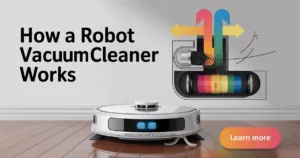
The invention of the robotic vacuum cleaner transformed how people use cleaning devices at home. Today, modern robot vacuums use advanced sensors and AI systems. They connect to smart homes to clean automatically and easily. To understand how this innovation started, we must look back at the early history of robot vacuums.
The Beginning of Robotic Vacuum Cleaner Technology
The first robotic vacuum cleaner came out in the 1990s. Engineers wanted to create machines that could clean on their own. The Electrolux Trilobite, developed by Electrolux in 1996, became the first autonomous robotic vacuum cleaner prototype.
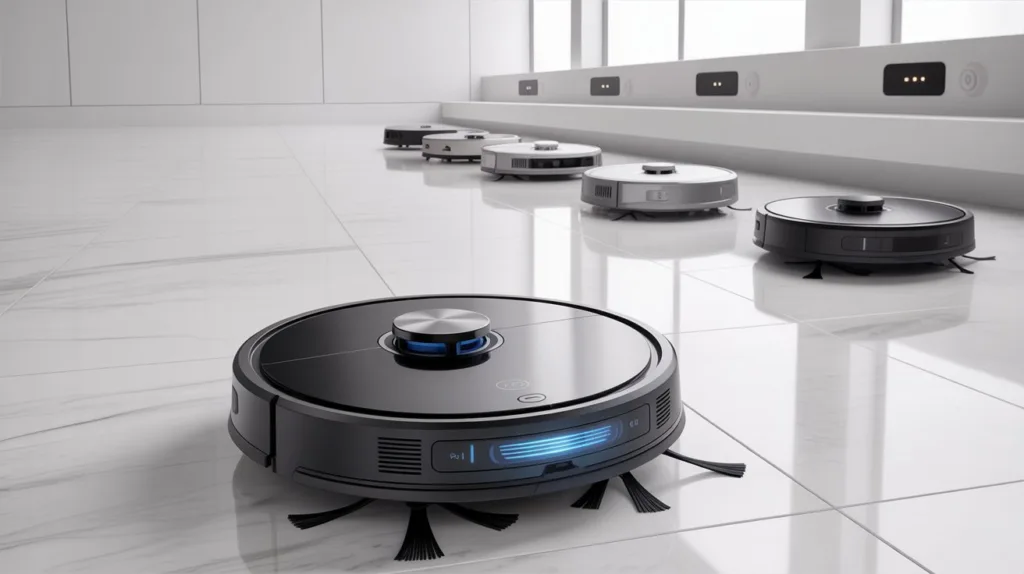
It used sensors to navigate rooms, obstacle detect walls and furniture, and return to its charging base automatically. This early version started a new chapter in home automation. It showed us autonomous cleaning for the first time.
In 2001, Electrolux launched the Electrolux Trilobite. The first easy-to-use and successful robotic vacuum cleaner for the public emerged. Though its cleaning pattern was simple and its suction power limited, it proved that autonomous floor cleaning was possible.
The Rise of iRobot and Neato Robotics
The year 2002 changed everything. iRobot introduced the Roomba, a successful robot vacuum that revolutionized home cleaning. It offered improved cleaning efficiency, better obstacle detection, and smoother navigation. The Roomba also became more affordable and user friendly, making it a household name worldwide.
A few years later, Neato Robotics entered the market and brought even more advanced robot vacuum designs. Neato’s D-shaped models cleaned edges better. They also used laser navigation to help the vacuum map rooms accurately. These innovations strengthened the role of robotic vacuum cleaners as essential cleaning machines in modern homes.
How Modern Robot Vacuums Work
Modern robot vacuums use AI powered processors and smart sensors that detect and avoid furniture, walls, and stairs. Their advanced navigation systems create accurate maps and generate optimized cleaning patterns for maximum cleaning efficiency. Many connect seamlessly with smart home systems and work with Alexa and Google for voice control.
Today’s advanced robot vacuums do more than just vacuum. They can also mop, work on different floor types, and empty their own dustbins. They detect and avoid obstacles intelligently, ensuring efficient and safe operation during every cleaning cycle.
The Evolution Toward Smarter Cleaning Devices
Over time, robotic vacuum cleaners have evolved from simple gadgets into intelligent cleaning devices. Their ability to learn from surroundings and adjust cleaning patterns shows how far technology has progressed. The use of obstacle detection technology, smart mapping, and AI algorithms helps these machines clean effectively. They can do complex tasks with little help from users.
These devices are part of smart home systems. They schedule cleaning sessions and report progress through mobile apps. They can also work with other appliances. The development of modern robot vacuums continues to focus on user-friendly features, efficient cleaning, and eco-friendly operation.
Conclusion
The journey from the Electrolux Trilobite to today’s robot vacuums shows progress. There have been many years of development in self-cleaning technology. Robotic vacuum cleaners have come a long way.
Early models could hardly move around a room. Now, smart devices can map entire homes. They have changed how people do housework. The combination of innovation, efficiency, and smart home compatibility ensures that cleaning machines will continue evolving toward even greater independence and performance.
FAQs
Who created the first robotic vacuum cleaner?
Electrolux developed the first robotic vacuum cleaner, the Electrolux Trilobite, in 1996.
When did robotic vacuum cleaners become popular?
They became commercially successful after iRobot launched the Roomba in 2002.
What role did Neato Robotics play in robot vacuum history?
Neato Robotics introduced laser-guided navigation and improved cleaning efficiency, making robotic vacuums more advanced and precise.
How do modern robot vacuums work?
Modern robot vacuums use AI processors. They have sensors that detect and avoid obstacles. They also use smart cleaning patterns for better floor coverage.
Can robotic vacuums connect to smart home systems?
Yes. Most advanced models work with Alexa and Google, allowing hands-free control through voice commands.
When were robot vacuums invented?
The first commercial robot vacuum, the Electrolux Trilobite, was invented in 1996. However, the technology didn’t become a household staple until 2002, when iRobot launched the Roomba, which featured more affordable pricing and practical cleaning capabilities.